Dussehra
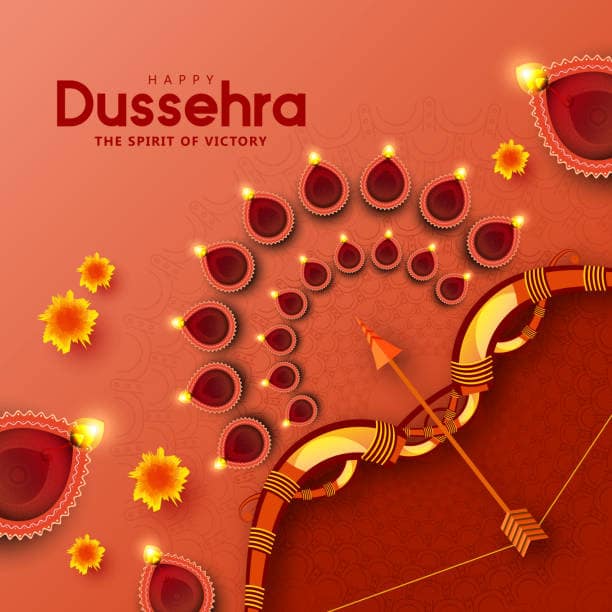
September / October
What is Dussehra?
It celebrates the victory of good over evil and righteousness (dharma) over arrogance.
Key Facts
- When
- September / October
- Traditional foods
- Jalebi, Fafda, Shrikhand
The Story
Dussehra, also called Vijayadashami, marks Lord Rama's victory over the demon king Ravana and Goddess Durga's triumph over the buffalo demon Mahishasura. Towering effigies of Ravana, Meghnad and Kumbhakarna are set ablaze to celebrate the defeat of evil.
Why We Celebrate
It celebrates the victory of good over evil and righteousness (dharma) over arrogance.
Puja Vidhi
- 1Worship Lord Rama and Goddess Durga
- 2Perform Shastra Puja (worship of tools and instruments)
- 3Watch or attend Ramlila performances
- 4Witness the burning of Ravana's effigy at dusk
Bhajans
Shri Ramchandra Kripalu, Jai Jai Ram Ram
Festive Food
Jalebi, Fafda, Shrikhand, Ladoo
Frequently Asked Questions
What is the difference between Dussehra and Vijayadashami?
They are the same festival — Vijayadashami is the Sanskrit name, while Dussehra is the popular North Indian name.
Why is Ravana's effigy burnt?
Burning the effigy symbolises the destruction of ego, evil and adharma, and the triumph of Lord Rama.
Explore related
Reviewed by the Bhakti by Agentic Vani editorial team
Last updated June 29, 2026. Content is presented for devotional and educational purposes, with traditional beliefs framed as such. Sources: Puranas and traditional Hindu festival accounts.